Overview & Focus
The Community Meals Initiative expands access to healthy local food and medically tailored meals, reduces waste through reuse and recovery infrastructure, and builds economic resilience for local food purveyors.
What We Do
Partnering with healthcare and community organizations to deliver fresh, organic meals for residents managing chronic illness.
Providing technical assistance, EcoSorting Stations, and the West Marin Events Library to displace single-use foodware.
Supporting local gleaning and food recovery networks to divert surplus edible food to food pantries and community meal programs.
Incubating 15+ local food businesses with training, permitting guidance, and catering opportunities.
Inventorying regional kitchen assets to establish joint-use agreements for local food production.
Our Impacts
What began as practical support for West Marin community meals is now connecting local food service, waste reduction, regulatory compliance, and university research creating a model for more sustainable community meals and events in the coastal zone.
3,200+ meals delivered to 41 residents managing chronic illness (2022–2024, Ceres Community Project & HHS).
12,000+ pounds of surplus edible food recovered and redistributed (3-year total, ExtraFood & Glean Team).
$120,000 generated for local food makers across 100+ community events and markets.
An estimated 16,200 single-use items displaced annually across up to 90 supported events (West Marin Events Library).
Food makers gained pathways toward business development through the Small Business Development cohort and peer-to-peer learning opportunities.
Strengthened partnerships with the Point Reyes Disaster Council and North Coast Emergency Food System Partnership to address community feeding plans.
Success Story
Community Meals Advances Reusable Foodware & Waste Reduction
Over the past three years, the West Marin Food Systems Group has focused on implementing the Marin County Reusable Foodware Ordinance by providing education and technical assistance to community meal programs and local food vendors. Key accomplishments included making compliant compostable food ware available through a local West Marin retailer and supporting 95% food vendor participation at Western Weekend, demonstrating that reusable and compostable compliant foodware practices can be implemented at a large-scale community event.
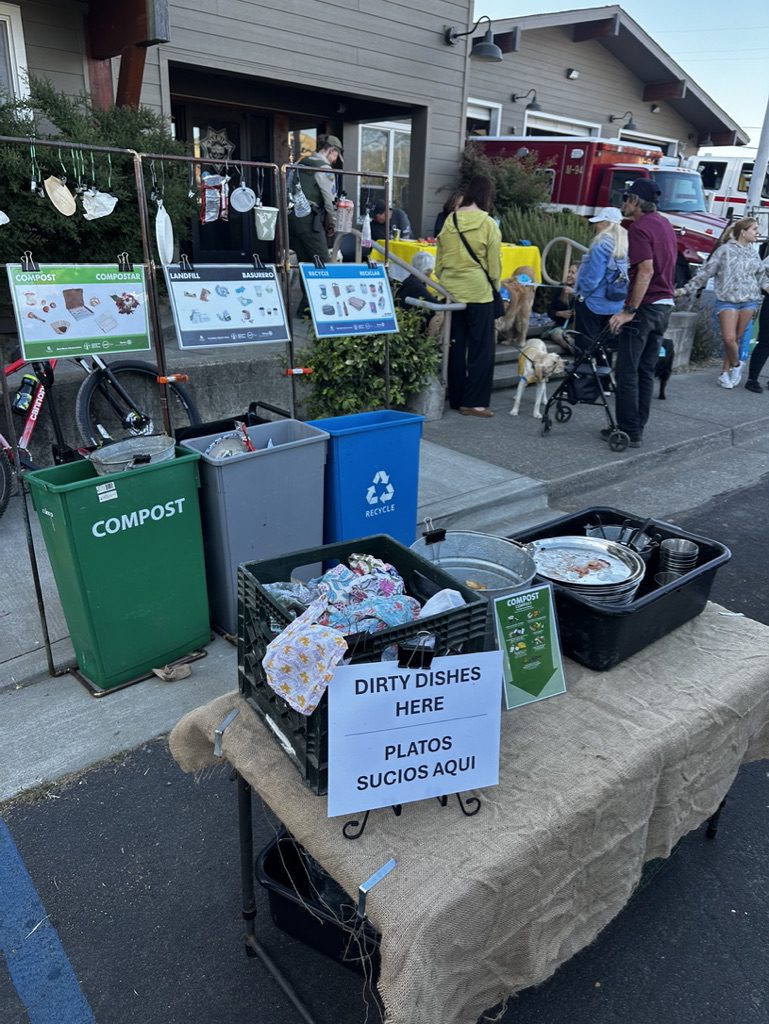
Over the past three years, the West Marin Food Systems Group has focused on implementing the Marin County Reusable Foodware Ordinance by providing education and technical assistance to community meal programs and local food vendors. Key accomplishments included making compliant compostable food ware available through a local West Marin retailer and supporting 95% food vendor participation at Western Weekend, demonstrating that reusable and compostable compliant foodware practices can be implemented at a large-scale community event.
WMFS also developed and supported the deployment and ongoing use of the Eco-Sorting Stations to help community members correctly separate compost, recycling, and landfill materials. This ongoing West Marin Food Systems and West Marin Climate Action work now contributes to the two-year NOAA Sea Grant study, Bridging Science and Community: Waste Audits, Public Perception, and Coastal Sustainability, conducted with Leave No Trace, Cleaner California Coast, Penn State, and UC San Diego across Marin, Sonoma, and Mendocino counties. The Eco-Sorting Station research protocol underwent Institutional Review Board (IRB) review, supporting a rigorous study of how education and sorting interventions influence food-waste behaviors in coastal communities.